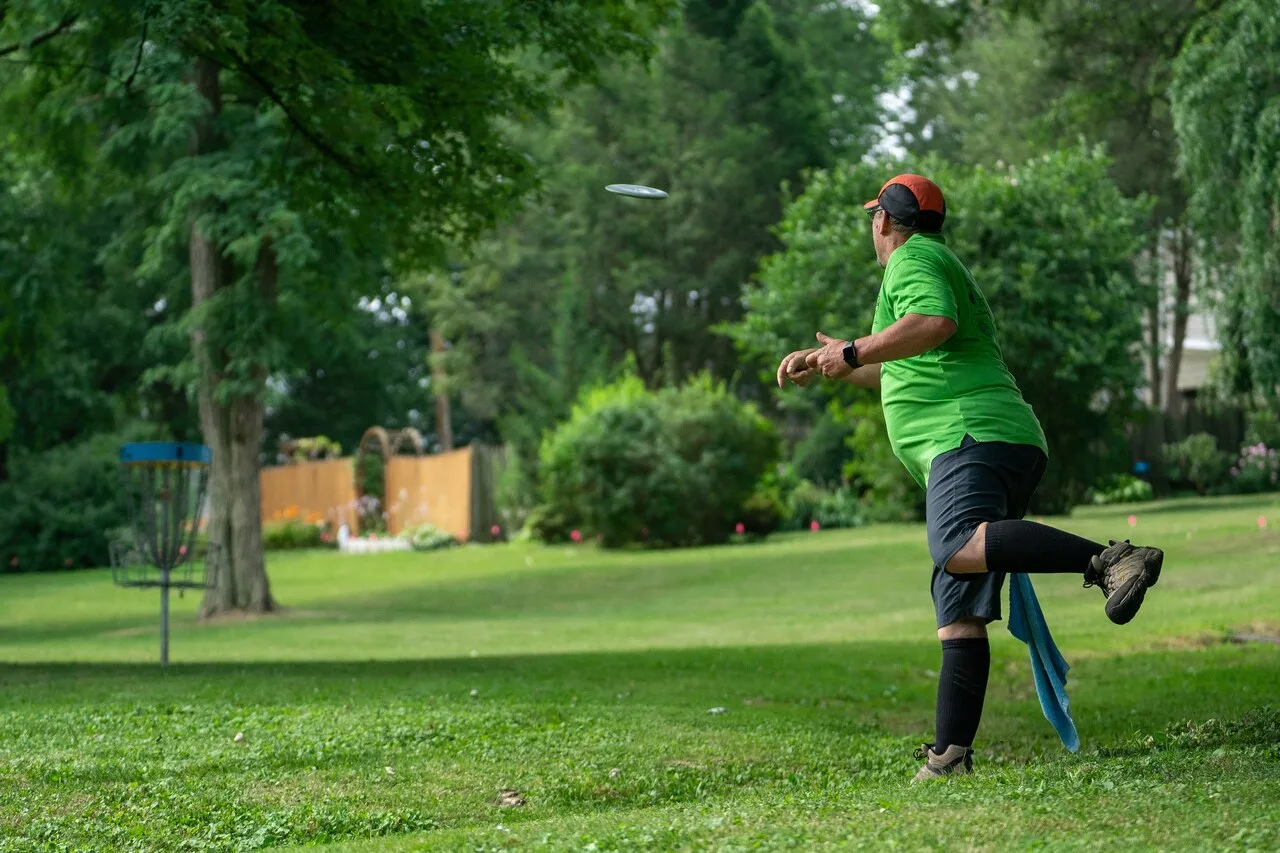
Disc golf has seen an incredible surge in popularity, captivating enthusiasts worldwide. Whether you’re a beginner just learning the ropes or a seasoned player aiming for professional levels, the desire to improve disc golf performance is a common thread. Many players spend countless hours on the course, honing their technique through repetition. However, there comes a point where simply throwing more isn’t enough to achieve significant progress. This is where targeted off-course training becomes a game-changer, providing the foundational strength, refined mechanics, and endurance needed to truly elevate your game and achieve greater distance and control.
Understanding the Demands of Disc Golf 🌿
To truly improve disc golf performance, it’s essential to understand the sport’s unique physical demands. Disc golf isn’t just about arm strength; it’s a full-body athletic endeavor that relies on a complex interplay of power, precision, and endurance. From a coaching perspective, the distinction between players who incorporate training into their regimen and those who don’t becomes strikingly clear during a round. Athletes who consistently add distance, shape their shots with confidence, and maintain their performance late into a game often have a robust physical foundation. They’ve invested in building strength, enhancing their movement patterns, and meticulously refining the mechanics crucial for each throw.
The principles at play in disc golf mirror those found in other rotational sports, such as baseball or golf. The generation and transfer of force through the body are paramount. A comprehensive needs analysis for disc golf examines the specific demands of the throw itself and compares them to an athlete’s current capabilities. This process bridges the gap between the sport’s requirements and the individual’s physical attributes, pinpointing the critical physical qualities and movement patterns that directly influence distance, control, and overall consistency. Without this understanding, training efforts can be misdirected, leading to slower progress or even plateaus.
The Core Pillars of Disc Golf Excellence 💪
Achieving superior disc golf performance hinges on several key physical attributes. These pillars work synergistically to create a powerful, accurate, and repeatable throw. Focusing on these areas in your training will yield the most significant improvements:
- Rotational Power: The disc golf throw is fundamentally a rotational movement. Power isn’t just generated from the arm; it originates from the ground up, through the legs, hips, and core, culminating in the release. Developing robust rotational power allows for explosive, long-distance throws.
- Core Strength and Stability: The core acts as the central link in the kinetic chain. A strong and stable core efficiently transfers power from the lower body to the upper body, preventing energy leaks and protecting the spine. How to Build a Stronger Core Anywhere (Complete Guide) can provide valuable insights here.
- Balance and Proprioception: Maintaining balance throughout the throwing motion, especially during the powerful plant and follow-through, is crucial for accuracy and injury prevention. Proprioception, your body’s awareness of its position in space, also plays a vital role in consistent mechanics.
- Mobility and Flexibility: Optimal range of motion in the hips, thoracic spine, and shoulders is essential for a fluid, unrestricted throwing motion. Lacking mobility can limit power generation and increase the risk of strain or injury.
- Muscular Endurance: A typical disc golf round involves numerous throws, often over varying terrain. Muscular endurance ensures that your mechanics remain consistent from the first tee to the eighteenth hole, preventing fatigue-induced errors.
By systematically addressing each of these pillars, you lay a solid foundation for sustained improvement. Neglecting any one of them can create a weak link in your kinetic chain, limiting your potential.
Refining Mechanics and Movement Efficiency 🧠
While raw strength is important, the efficiency with which you apply that strength through proper mechanics is what truly distinguishes top-tier disc golf performance. The body operates as a kinetic chain, meaning force is generated sequentially from one body segment to the next. Any break or inefficiency in this chain can significantly reduce power and accuracy.
Consider the sequence: the drive begins with the lower body, engaging the legs and hips to generate initial power. This energy then transfers through the core, which acts as a stable conduit, and finally to the upper body, culminating in the arm and hand’s release of the disc. A smooth, coordinated transfer of force is critical. Research suggests that minor adjustments in foot placement, hip rotation, or shoulder engagement can dramatically impact disc speed and flight path.
Focusing on movement efficiency also involves identifying and correcting compensatory patterns. For instance, if your hips lack mobility, your body might try to compensate by over-rotating your spine, which can lead to instability and potential injury. Understanding these connections helps you train smarter, not just harder. Incorporating exercises that mimic the throwing motion, but with a focus on control and proper form, can help ingrain better movement patterns. This not only enhances performance but also significantly reduces the risk of common disc golf injuries.
The Power of Off-Course Training for Disc Golf 🏋️♀️
The growth of disc golf has led to a deeper player pool, making the margin between competitors tighter than ever. This is where preparation off the course truly starts to matter. Training in the gym provides a structured environment to develop the physical qualities directly transferable to your game. It’s about building a robust, resilient body that can withstand the demands of repeated powerful throws and long rounds.
Many players initially resist gym work, believing that more practice on the course is the only answer. However, as noted in the source material, progress often slows at some point, making it clear that throwing more isn’t the sole solution. A well-designed strength and conditioning program can address specific weaknesses, enhance power output, improve endurance, and bolster injury resilience.
“Participation in disc golf has climbed roughly 86% since 2020, with the total player base nearly tripling in that span. This rapid growth underscores the increasing competitiveness and the need for athletes to seek every advantage, including targeted physical training.”
Think of off-course training as building the engine for your throwing mechanics. You can have the perfect technique, but without the underlying strength, power, and endurance, your throws will lack consistency and distance. Similarly, developing foundational strength allows you to execute your desired mechanics more effectively and for longer periods without fatigue. This synergistic approach is key to sustained improvement and preventing plateaus.
Practical Tips to Improve Disc Golf Performance 🎯
Integrating a structured training regimen into your disc golf routine doesn’t have to be overwhelming. Here are actionable tips to help you get started and consistently improve disc golf performance:
- Prioritize Core Strength: Dedicate specific exercises to your core. Planks, Russian twists, medicine ball throws, and bicycle crunches are excellent for rotational power and stability. Remember, a strong core is the linchpin of an efficient throw.
- Focus on Rotational Power Exercises: Incorporate movements like medicine ball slams, rotational throws (with a partner or against a wall), and cable rotations. These mimic the disc golf motion and build explosive power in the hips and torso.
- Strengthen Your Lower Body: Your legs are the foundation of your throw. Squats, lunges, deadlifts, and step-ups will build powerful glutes and quads, essential for driving force from the ground up.
- Enhance Mobility: Regularly perform dynamic stretches and mobility drills for your hips, thoracic spine, and shoulders. Cat-cow, thoracic rotations, hip flexor stretches, and shoulder circles can significantly improve your range of motion.
- Incorporate Unilateral Training: Single-leg exercises like single-leg Romanian deadlifts or pistol squats improve balance and address muscular imbalances, which are crucial for the dynamic nature of a disc golf throw.
- Build Muscular Endurance: Include circuit training or higher-rep sets in your workouts. This will help you maintain consistent performance throughout long rounds and tournaments.
- Warm-Up and Cool-Down Effectively: A proper warm-up prepares your body for the demands of throwing, while a cool-down aids recovery and flexibility. Don’t skip these vital steps.
- Cross-Train with Complementary Activities: Consider activities like yoga or Pilates to further enhance flexibility, balance, and core strength. Swimming can also be excellent for overall conditioning without high impact.
- Seek Professional Guidance: If possible, work with a certified strength and conditioning coach or a disc golf-specific trainer. They can provide a personalized program tailored to your needs and goals. Always consult a healthcare professional before starting any new exercise program.
- Listen to Your Body and Recover: Overtraining can lead to injury and burnout. Ensure adequate rest, sleep, and nutrition to support your training efforts. Unlock Your Full Potential: The Synergistic Power of Sleep & Fitness highlights the importance of recovery.
Key Takeaways for Optimal Disc Golf Performance ✨
To truly excel and improve disc golf performance, a holistic approach that extends beyond the disc golf course is essential. Here’s a summary of the most important points:
- Disc golf is a rapidly growing sport, and off-course training is becoming increasingly vital for competitive advantage and sustained improvement.
- The sport demands a combination of rotational power, core strength, balance, mobility, and muscular endurance.
- Proper mechanics and movement efficiency are crucial for transferring force effectively and preventing energy loss during the throw.
- Off-course training builds the physical foundation necessary to support and enhance your throwing technique, leading to greater distance and control.
- A structured training program should target core stability, rotational power, lower body strength, and overall mobility.
- Consistency in training, proper warm-ups, cool-downs, and adequate recovery are just as important as the exercises themselves.
- Consider professional guidance to tailor a training plan specific to your individual strengths and weaknesses.
- Consult a healthcare professional before embarking on any new fitness regimen to ensure it’s safe and appropriate for your health status.
Frequently Asked Questions ❤️
How often should I train off-course for disc golf?
For most players looking to improve disc golf performance, 2-3 structured strength and conditioning sessions per week are a good starting point. This allows for adequate recovery between sessions while consistently building strength and power. Listen to your body and adjust as needed.
What are the most common injuries in disc golf and how can training prevent them?
Common disc golf injuries include shoulder pain, elbow issues (like golfer’s or tennis elbow), lower back strain, and knee problems. Targeted strength training, especially for the rotator cuff, core, and lower body, combined with mobility work, can significantly reduce the risk of these injuries by improving joint stability, muscle balance, and proper movement patterns.
Can simply playing more rounds replace gym training for disc golf?
While playing more rounds helps refine technique and course management, it typically won’t build the foundational strength, power, and muscular endurance needed for significant, long-term improvement in distance and control. As the source notes, at some point, progress slows without off-course training. The gym addresses the physical qualities that playing alone often cannot fully develop.
Is it safe to do strength training if I’m new to disc golf?
Yes, it’s generally safe and highly beneficial to incorporate strength training even as a beginner. Starting with fundamental movements, lighter weights, and focusing on proper form will build a solid base. Always consult a healthcare professional before starting any new exercise program, especially if you have pre-existing conditions, to ensure it’s appropriate for you.
The Bottom Line 🌞
The journey to truly improve disc golf performance is a dynamic one, extending beyond the fairways and into the realm of dedicated physical preparation. As the sport continues its rapid ascent, the competitive landscape demands more than just innate talent or countless hours on the course. It requires a strategic commitment to building a stronger, more agile, and more resilient body. By embracing targeted off-course training, focusing on core strength, rotational power, and overall mobility, disc golfers can unlock new levels of distance, precision, and consistency. Remember, your body is your most important piece of equipment. Invest in its care and development, and you’ll not only see remarkable improvements in your game but also enjoy a longer, healthier, and more fulfilling disc golf career. Always consult a healthcare professional or a certified fitness expert to tailor a training plan that best suits your individual needs and goals.
Sources:
- The Disc Golf Training Guide: Build Strength, Refine Mechanics, and Throw Farther
- Disc Golf, a Growing Sport: Description and Epidemiology of Injuries — PubMed
- Stay Fit For Disc Golf: Prevent Injuries, Play Longer — UDisc Blog
How Healthy Are Your Habits?
10 quick questions · Get your personal wellness score