
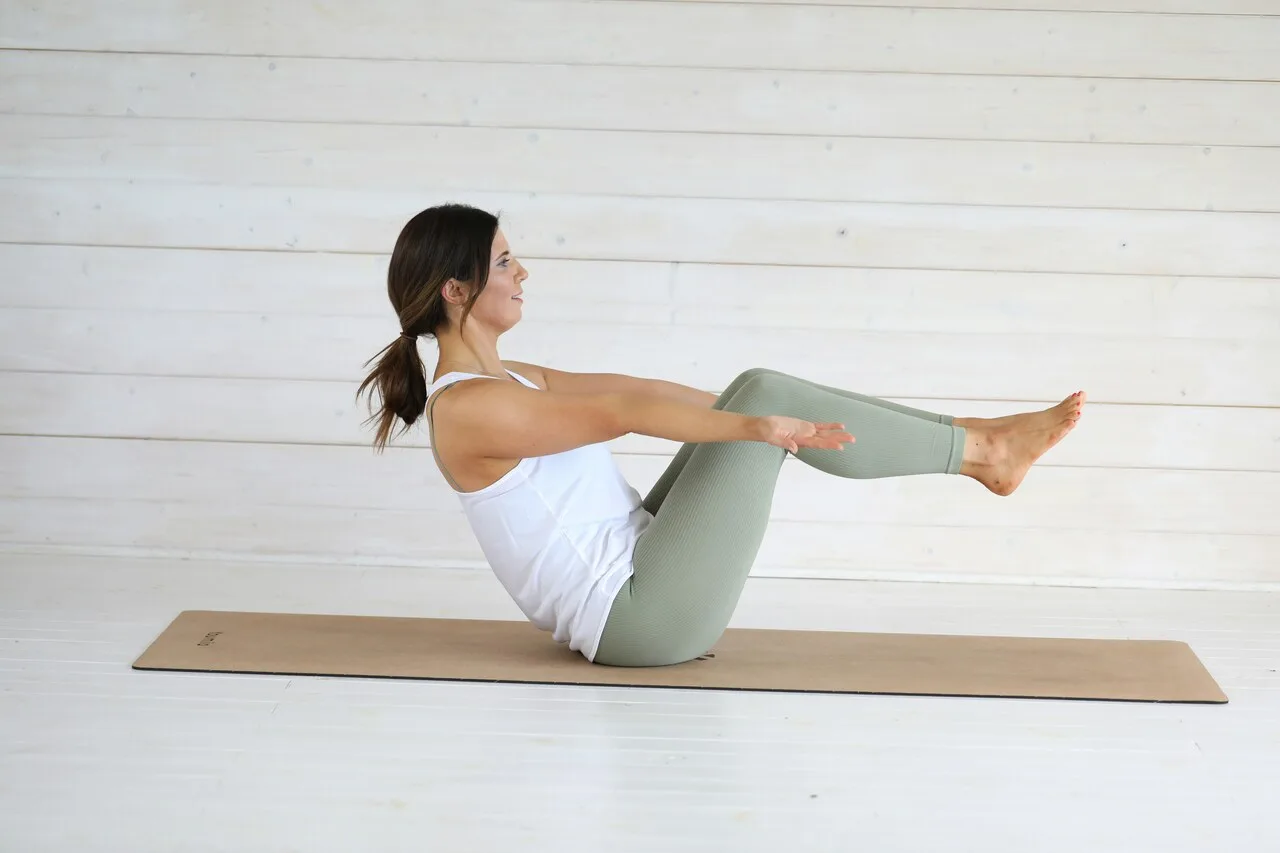
Are you looking to sculpt a powerful midsection without needing a gym full of equipment? Many people search for effective ways to build a stronger core anywhere, whether at home, in a hotel room, or even outdoors. A strong core is fundamental for overall fitness, preventing injuries, and improving athletic performance. This comprehensive guide will explore the benefits of a robust core and provide actionable strategies, including a highly effective, equipment-free workout inspired by fitness expert Jade Henderson, to help you achieve your goals. Get ready to transform your abs and enhance your functional strength!
Understanding the Power of a Strong Core 🌿
Your core is much more than just your abdominal muscles. It encompasses all the muscles that attach to your spine and pelvis, including your abs, obliques, lower back, and even your glutes and hip flexors. These muscles work together to stabilize your entire body, enabling you to perform everyday movements and complex athletic feats with greater efficiency and less risk of injury.
Think of your core as the central powerhouse of your body. Every movement you make, from lifting groceries to running a marathon, originates from or passes through your core. A weak core can lead to poor posture, back pain, and diminished performance in virtually every physical activity. Conversely, a strong core acts as a stable foundation, allowing your limbs to generate more power and move with greater control.
Research consistently highlights the critical role of core strength. For instance, studies indicate that individuals with stronger core muscles often experience fewer instances of lower back pain. Furthermore, athletes across various disciplines, from weightlifting to yoga, credit core strength as a key factor in their success. It’s not just about aesthetics; it’s about functional fitness and long-term health.
The Anatomy of Your Core: More Than Just Abs 💪
To effectively train your core, it’s helpful to understand the key muscle groups involved. Focusing on these areas ensures a well-rounded and functional core. Let’s break down the main players:
- Rectus Abdominis: Often called the ‘six-pack’ muscles, these run vertically along the front of your abdomen. Their primary function is to flex your spine, bringing your rib cage closer to your pelvis (think crunches).
- Obliques (Internal and External): Located on the sides of your waist, these muscles are responsible for twisting and side-bending movements of the torso. They also assist in spinal flexion and provide stability.
- Transverse Abdominis (TVA): This is the deepest abdominal muscle, wrapping around your torso like a corset. The TVA is crucial for stabilizing the spine and pelvis before any movement of the limbs. It acts as your body’s natural weightlifting belt.
- Erector Spinae: A group of muscles running along your spine, from your neck to your lower back. These muscles help extend and rotate the spine, playing a vital role in posture and preventing slouching.
- Multifidus: Small, deep muscles located along the spine that provide segmental stability and support.
- Pelvic Floor Muscles: These muscles form a sling at the bottom of your pelvis, supporting your organs and contributing to core stability.
- Hip Flexors: A group of muscles that connect your spine and pelvis to your thigh bones, involved in lifting your knees and bending at the hip.
When you aim to build a stronger core anywhere, your exercises should ideally engage multiple of these muscle groups simultaneously. This integrated approach ensures balanced development and superior functional strength. Neglecting any one area can create imbalances, potentially leading to injuries or decreased performance.
Benefits of a Strong Core Beyond Aesthetics 🧠
While a sculpted midsection is a common goal, the advantages of a strong core extend far beyond visual appeal. These benefits contribute significantly to your overall health and quality of life:
- Improved Posture: A strong core helps you stand taller and sit straighter, counteracting the effects of prolonged sitting and reducing strain on your back and neck. Good posture can alleviate chronic pain and enhance your appearance.
- Reduced Back Pain: A weak core is a primary contributor to lower back pain. By strengthening the muscles that support your spine, you create a natural brace, significantly reducing discomfort and preventing future issues.
- Enhanced Athletic Performance: Whether you’re a runner, a weightlifter, or enjoy recreational sports, a strong core translates to better balance, power, and agility. It allows for more efficient transfer of force throughout your body.
- Better Balance and Stability: Your core is central to maintaining balance. A strong core helps you stay steady on your feet, reducing the risk of falls, especially as you age. This is crucial for everyday tasks and dynamic movements.
- Injury Prevention: By stabilizing your spine and pelvis, a strong core protects your back from undue stress during physical activities. It helps ensure proper movement mechanics, safeguarding your joints and muscles.
- Improved Breathing: Core muscles, particularly the diaphragm and transverse abdominis, play a role in respiration. A stronger core can support more efficient breathing, which is beneficial during exercise and for overall lung health.
- Increased Functional Strength: Everyday activities like lifting heavy objects, bending down, or even standing for long periods become easier and safer with a strong core. It improves your ability to perform daily tasks with less effort.
As you can see, investing time to build a stronger core anywhere yields a remarkable return in terms of health, performance, and well-being. It’s a foundational element of a truly fit body.
Jade Henderson’s Quick & Brutal Core Finisher 💧
When time is short and equipment is scarce, an effective bodyweight workout can be a game-changer. Inspired by fitness sensation and Guinness World Record holder Jade Henderson, this quick and brutal ab finisher is designed to obliterate your core using just a mat and a wall. Henderson, known online as “G. I. Jaded,” shared this powerful routine as one of her go-to methods for hitting her midsection from all angles.
This circuit is perfect as a standalone workout when you need to build a stronger core anywhere, or as a challenging finisher to your regular training session. It targets the rectus abdominis, obliques, transverse abdominis, and even recruits hip flexors and quads for a comprehensive burn. The beauty of this workout lies in its simplicity and effectiveness.
Jade Henderson’s 3-Move Ab Finisher (Step-by-Step Guide)
Lie down on your back with the soles of your feet flat against a wall, ensuring your knees are bent at approximately a 90-degree angle. Repeat this circuit for three rounds, aiming for minimal rest between exercises and rounds.
- 50 Crunches:
- Starting Position: Lie on your back with your feet flat against the wall, knees bent. Place your hands lightly behind your head or crossed over your chest.
- Movement: Engaging your core, lift your head, shoulders, and upper back off the mat, bringing your rib cage towards your pelvis. Focus on squeezing your abdominal muscles rather than pulling with your neck.
- Focus: Primarily targets the rectus abdominis, providing that classic ‘crunch’ sensation.
- Return: Slowly lower back down with control.
- 50 Side-to-Sides (Heel Taps):
- Starting Position: Remain on your back with feet against the wall, knees bent. Lift your head and shoulders slightly off the mat, maintaining a slight crunch position. Extend your arms down by your sides.
- Movement: Reach your right hand towards your right heel, tapping it if possible, engaging your right oblique. Then, without fully lowering your shoulders, reach your left hand towards your left heel. Alternate sides.
- Focus: This variation, demonstrated by Henderson, effectively works the obliques and transverse abdominis, improving spinal stabilization.
- Rep Count: Each tap (right and left) counts as one rep, so you’ll perform 25 taps per side.
- 50 Elbow-to-Knees (Bicycle Crunches):
- Starting Position: Lie on your back, hands lightly behind your head. Bring both knees up towards your chest, lifting your head and shoulders off the mat.
- Movement: Extend your right leg straight while simultaneously twisting your torso to bring your right elbow towards your left knee. Then, switch sides: extend your left leg and bring your left elbow towards your right knee. Continue alternating in a controlled, fluid motion.
- Focus: This dynamic movement engages the rectus abdominis, obliques, transverse abdominis, and also recruits the hip flexors and quads, offering a full-body core challenge.
- Rep Count: Each full cycle (right elbow to left knee, then left elbow to right knee) counts as one rep. So, you’ll perform 25 cycles.
“Guaranteed to feel the burn,” commented the Guinness World Record breaker, Jade Henderson, about this intense core circuit.
Remember, consistency is paramount when building muscle. Incorporating this routine regularly, even just a few times a week, can yield significant results in your quest to build a stronger core anywhere. Pay attention to your form, prioritize control over speed, and breathe deeply throughout each exercise.
Practical Tips for Maximizing Core Strength ✨
Beyond specific exercises, several strategies can help you optimize your core training and ensure lasting results. These tips will help you integrate core work seamlessly into your lifestyle and get the most out of every session.
- Focus on Mind-Muscle Connection: Don’t just go through the motions. Actively think about squeezing and engaging your core muscles during each rep. This enhances neural activation and makes your workouts more effective.
- Prioritize Proper Form Over Speed: It’s better to perform fewer reps with perfect form than many reps with sloppy technique. Incorrect form can lead to injury and diminishes the effectiveness of the exercise. If you’re struggling, slow down or reduce the range of motion until your form is solid.
- Incorporate Core Work Regularly: Aim for at least 3-4 core-focused sessions per week. Your core muscles can recover relatively quickly, allowing for frequent training. Consistency is key to seeing progress.
- Vary Your Exercises: While Henderson’s circuit is excellent, regularly introducing new exercises or variations challenges your core in different ways. This prevents plateaus and ensures comprehensive muscle development. Explore planks, Russian twists, leg raises, and bird-dogs.
- Engage Your Core in Other Workouts: Consciously brace your core during squats, deadlifts, push-ups, and even cardio. This not only strengthens your core but also improves stability and power for those exercises. Boosting your exercise performance often starts with a strong core.
- Breathe Properly: Deep, diaphragmatic breathing helps engage your transverse abdominis. Exhale as you exert effort (e.g., as you crunch up) and inhale as you return to the starting position. This technique supports core activation and stability.
- Stay Hydrated and Nourished: Muscle growth and recovery depend on proper nutrition and hydration. Ensure you’re consuming enough protein, healthy fats, and complex carbohydrates, and drinking plenty of water throughout the day. For tips on speeding up muscle recovery with food, check out our expert guide.
- Listen to Your Body: While a ‘burn’ is good, sharp pain is not. If you experience discomfort, stop and assess your form. Rest when needed, and don’t push through pain. Consider consulting a fitness professional if you have persistent issues.
By integrating these practical tips into your routine, you’ll not only build a stronger core anywhere but also foster a more sustainable and effective fitness journey. Remember, progress takes time and dedication, but the benefits are well worth the effort.
Common Mistakes to Avoid in Core Training ❤️
Even with the best intentions, it’s easy to fall into common traps that hinder core development or even lead to injury. Being aware of these pitfalls can help you optimize your training and ensure you effectively build a stronger core anywhere.
- Relying Solely on Crunches: While crunches are good for the rectus abdominis, an over-reliance on them can lead to imbalances. Your core needs to be worked from all angles, including anti-rotation and anti-extension movements.
- Arching Your Lower Back: This is a common mistake, especially during exercises like leg raises or planks. Arching your back puts undue stress on your spine and disengages your core. Always aim to keep your lower back pressed into the floor or maintain a neutral spine.
- Using Momentum Instead of Muscle: Swinging your limbs or using jerky movements to complete reps indicates that your core muscles aren’t doing the work. Slow down and focus on controlled, deliberate contractions.
- Holding Your Breath: While bracing (holding your breath momentarily) is sometimes used for heavy lifts, for most core exercises, continuous breathing is crucial. Holding your breath can increase blood pressure and reduce oxygen flow to your muscles.
- Neglecting Your Back Muscles: A strong core includes the muscles of your lower back. Focusing only on your abs without strengthening your posterior chain can create muscular imbalances and lead to back pain. Incorporate exercises like supermans or back extensions.
- Doing Too Many Reps with Poor Form: More isn’t always better. If your form deteriorates after a certain number of reps, it’s time to stop or take a break. Quality trumps quantity for effective muscle building and injury prevention.
- Ignoring Progressive Overload: Just like any other muscle group, your core needs to be progressively challenged to grow stronger. This means gradually increasing reps, sets, difficulty, or decreasing rest times. If you’re not seeing fitness results, this might be why.
- Skipping Warm-ups and Cool-downs: A proper warm-up prepares your core muscles for activity, while a cool-down aids in recovery and flexibility. Don’t underestimate their importance.
By actively avoiding these mistakes, you’ll ensure your core training is safe, effective, and truly helps you build a stronger core anywhere. Remember, consistency and smart training are your best allies.
Key Takeaways 💪
Developing a strong and functional core is a cornerstone of overall fitness and well-being. Here are the essential points to remember on your journey to build a stronger core anywhere:
- Your core is a complex network of muscles, including the rectus abdominis, obliques, transverse abdominis, and lower back muscles, all vital for stability.
- A strong core offers benefits far beyond aesthetics, including improved posture, reduced back pain, enhanced athletic performance, better balance, and injury prevention.
- Jade Henderson’s 3-move circuit (crunches, side-to-sides, elbow-to-knees with feet on a wall) is a highly effective, equipment-free routine to challenge your entire midsection.
- Consistency is paramount; aim for 3-4 core workouts per week.
- Prioritize proper form over speed or high rep counts to maximize effectiveness and prevent injury.
- Engage your mind-muscle connection, vary your exercises, and remember to breathe correctly during each movement.
- Avoid common mistakes like relying solely on crunches, arching your back, or using momentum instead of muscle.
- Always listen to your body, stay hydrated, and ensure proper nutrition to support muscle growth and recovery.
Frequently Asked Questions 🧠
How long does it take to build a stronger core?
Results vary depending on individual starting fitness levels, consistency, and intensity of workouts. However, with consistent effort (3-4 times per week) and proper nutrition, you can typically start to feel and see improvements in core strength within 4-6 weeks. Significant changes may take 2-3 months or longer.
Can you build a strong core without equipment?
Absolutely! Many highly effective core exercises require no equipment at all, using just your body weight, gravity, and sometimes a wall for leverage, as demonstrated in Jade Henderson’s workout. Planks, crunches, leg raises, bicycle crunches, and Russian twists are all excellent options you can do anywhere.
Is it safe to do core exercises every day?
While some lighter core exercises can be done daily, it’s generally recommended to give your muscles 24-48 hours to recover, especially after intense sessions. Over-training can lead to fatigue, decreased performance, and increased risk of injury. Aim for 3-5 dedicated core workouts per week, allowing for rest days in between.
What are the best core exercises for lower back pain?
For lower back pain, focus on exercises that promote spinal stability and strengthen the deep core muscles without excessive flexion or extension. Examples include planks, bird-dogs, dead bugs, and pelvic tilts. Always consult a healthcare professional or physical therapist before starting new exercises if you have existing back pain. Improving knee stability can also indirectly help with overall body alignment and reduce back strain.
The Bottom Line ✨
Achieving a truly strong and resilient core is an incredibly rewarding journey that offers profound benefits for your overall health, performance, and daily life. You don’t need a fancy gym or expensive equipment to make significant progress. As Jade Henderson’s effective circuit demonstrates, with just your body weight, a wall, and unwavering determination, you can effectively build a stronger core anywhere.
By understanding the anatomy of your core, embracing a variety of exercises, prioritizing proper form, and staying consistent, you’ll unlock a new level of functional strength and stability. Remember, your core is your body’s powerhouse; investing in its strength is investing in your entire well-being. Start today, and feel the transformative power of a truly strong core!
Sources:
- Jade Henderson’s Quick and Brutal Ab Workout: Build a Stronger Core Anywhere
- Core-Based Exercise and Chronic Low Back Pain – PubMed / NIH
How Healthy Are Your Habits?
10 quick questions · Get your personal wellness score