Are you dreaming of building a powerful lower body, complete with thick quads, sculpted hamstrings, and well-developed glutes? Many aspiring athletes and fitness enthusiasts often overlook the importance of a comprehensive leg day, focusing instead on the more visible upper body muscles. However, a strong foundation is crucial for overall athleticism and can significantly impact your performance in any physical activity. IFBB Pro Regan Grimes, known for his impressive physique, champions a straightforward yet incredibly effective approach to leg development: a simple 2-set strategy. This method emphasizes quality over sheer volume, allowing for maximum muscle engagement and growth. Let’s dive into how you can adapt this powerful technique to sculpt your own monster legs.
The Power of Focused Sets: Why Less Can Be More 🌿
Regan Grimes, a seasoned competitor with a two-time Olympia finalist title under his belt, attributes his formidable leg development to a deliberate training philosophy. His secret? Focusing on just two intense working sets per exercise. This approach might seem counterintuitive in a world often obsessed with high-volume training, but it’s grounded in sound physiological principles. By concentrating your effort into fewer, more impactful sets, you can achieve a deeper level of muscle activation and fatigue. This allows for better mind-muscle connection, improved form, and a more potent stimulus for hypertrophy – the process of muscle growth. For anyone looking to build significant lower body mass, understanding this principle is key. It’s not about how many sets you do, but how effectively you perform them. This strategy is particularly beneficial for those who struggle to maintain intensity throughout a long, high-volume workout or those looking to optimize their training time.
Grimes’ Leg Day Blueprint: An Exercise Breakdown 💪
Regan Grimes doesn’t just stick to a general idea; he has a precise sequence of exercises designed to systematically target every major muscle group in the lower body. His workout is a masterclass in prioritizing muscle engagement, starting with isolation movements and progressing to compound exercises. This strategic ordering ensures that smaller, stabilizing muscles are warmed up and ready to contribute to the heavier, more demanding lifts later in the session.
Phase 1: Pre-Exhausting with Isolation 💧
Grimes kicks off his leg day with exercises that isolate specific muscle groups, particularly the inner and outer thighs and hamstrings. This pre-exhaust phase is critical. By fatiguing these muscles early on, they are primed to be worked even harder when they are called upon during compound movements. This not only enhances the overall stimulus for growth but also helps to build a more balanced physique by ensuring that often-neglected areas receive adequate attention.
- Seated Adductor Machine: This machine targets the adductor muscles on the inner thigh. By focusing on squeezing the legs together, Grimes ensures these often-underworked muscles are engaged from the outset. This is crucial for overall leg development and can improve stability during compound lifts.
- Abductor Machine: The counterpoint to the adductor machine, this targets the abductor muscles of the outer hip and glutes. Pushing the legs apart effectively works these muscles, contributing to hip stability and a more shapely lower body.
- Lying Hamstring Curl: Following the hip isolation, Grimes moves to a hamstring-focused exercise. The lying hamstring curl directly isolates the hamstrings, initiating the fatigue process in the posterior chain. This preparation is vital before moving onto exercises that demand greater hamstring involvement, like the leg press and squats.
Phase 2: Building Mass with Compound Lifts ✨
Once the isolation work is complete and the target muscles are sufficiently pre-fatigued, Grimes transitions to the heavy hitters – compound exercises. These movements work multiple muscle groups simultaneously, allowing for the use of heavier weights and stimulating significant muscle hypertrophy and strength gains. The pre-exhaust strategy ensures that even as fatigue sets in, the primary muscles targeted by these compound lifts are still being maximally challenged.
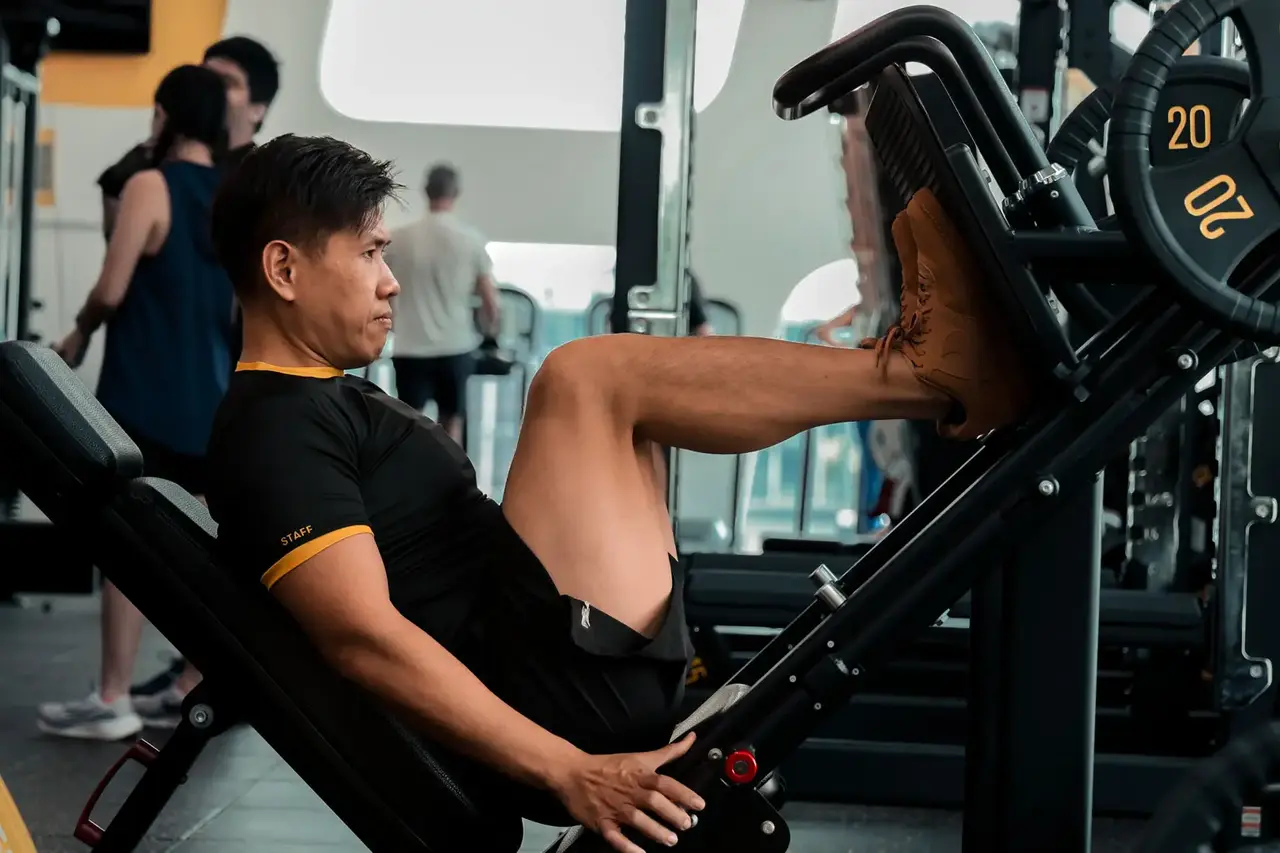
- Leg Press: A cornerstone of any effective leg day, the leg press allows for the recruitment of the quadriceps, glutes, and hamstrings. By placing the feet strategically on the platform, you can emphasize different areas. Grimes uses this as a major mass-building movement, leveraging the pre-fatigued state of his legs to push heavy weight. For a deeper dive into lower body strength, consider exploring how to build muscle at any age, as the principles of progressive overload and effective exercise selection apply universally.
- Pendulum Squat: This unique machine offers a greater range of motion than a traditional squat, placing a significant emphasis on the quadriceps. The pendulum squat allows for a deep stretch at the bottom, providing a powerful stimulus for quad growth. The stability offered by the machine also allows for a focused contraction, maximizing the benefits of Grimes’ two-set approach.
Phase 3: Unilateral Strength and Finishing Touches 🌞
The final phase of Grimes’ leg workout focuses on addressing potential imbalances and providing a final stimulus to the calves. Unilateral exercises, which work one limb at a time, are excellent for identifying and correcting strength discrepancies between the left and right sides of the body. This can lead to more balanced development and improved athletic performance. Furthermore, dedicating attention to calf training ensures that this often-stubborn muscle group receives the stimulus it needs to grow.
- Bulgarian Split Squat: This challenging unilateral exercise works the quads, glutes, hamstrings, and calves of the working leg, while also engaging the core for stability. By forcing each leg to work independently, it helps to identify and rectify any imbalances, ensuring symmetrical development. The increased range of motion and balance challenge make it a potent finisher.
- Calf Raise: Grimes concludes his intense leg session with a calf raise, an isolation exercise for the gastrocnemius and soleus muscles. This final push ensures that the calves, which are often trained less intensely than other leg muscles, get a direct stimulus, contributing to overall lower leg aesthetics and strength.
Mastering the 2-Set Strategy: Intensity and Execution 🧠
The efficacy of Regan Grimes’ 2-set strategy hinges on one critical factor: intensity. Simply performing two sets is not enough; these sets must be executed with maximal effort, pushing close to muscular failure. This is where the magic happens, signaling to your muscles that they need to adapt and grow stronger.
- Weight Selection: Choose a weight that allows you to comfortably complete 8-12 repetitions with excellent form. This rep range is widely recognized as optimal for hypertrophy. As you get stronger, progressively increase the weight (progressive overload) to continue challenging your muscles.
- Rep Range Focus: Aim for the 8-12 rep range. If you can easily do more than 12 reps with good form, the weight is too light. If you can’t reach at least 8 reps, it’s too heavy and may compromise your form.
- Mind-Muscle Connection: Focus intently on the muscles you are working during each repetition. Feel the stretch at the bottom of the movement and the contraction at the peak. This mental focus enhances muscle activation.
- Controlled Tempo: Perform each repetition with control. Avoid using momentum. A common tempo recommendation is 2 seconds for the eccentric (lowering) phase, a brief pause at the bottom, and 1-2 seconds for the concentric (lifting) phase.
- Rest Periods: Allow adequate rest between your two working sets, typically 60-90 seconds. This ensures you can maintain intensity for the second set.
- Push to Failure (or Near Failure): The last few repetitions of each set should be challenging. You should feel a significant burn and struggle to complete the final reps with perfect form. This is the signal for muscle growth.
Studies suggest that training to muscular failure, even with fewer sets, can be as effective, if not more effective, for muscle hypertrophy compared to higher volume training that doesn’t reach failure.
Beyond the Sets: Nutrition and Recovery for Growth ❤️
While Regan Grimes’ 2-set leg workout provides a powerful stimulus, muscle growth doesn’t happen solely in the gym. Nutrition and recovery are equally vital components of building bigger, stronger legs. The other half involves fueling your body correctly and allowing it to repair and rebuild.
- Protein Intake: Ensure you are consuming sufficient protein to repair and build muscle tissue. Aim for approximately 1.6-2.2 grams of protein per kilogram of body weight per day.
- Carbohydrates: Don’t fear carbs! They provide the energy needed for intense workouts and help replenish glycogen stores post-exercise, aiding recovery. Focus on complex carbohydrates like oats, brown rice, and sweet potatoes.
- Healthy Fats: Essential for hormone production and overall health, include sources like avocados, nuts, seeds, and olive oil in your diet.
- Hydration: Staying well-hydrated is crucial for all bodily functions, including muscle function and recovery. Drink plenty of water throughout the day.
- Sleep: Aim for 7-9 hours of quality sleep per night. This is when your body does most of its muscle repair and growth.
- Active Recovery: Light activities like walking, stretching, or foam rolling on rest days can improve blood flow and reduce muscle soreness. For more insights, check out how to speed up muscle recovery with food, which complements this training strategy perfectly.
Common Pitfalls to Avoid ❌
Even with a proven strategy like Grimes’, there are common mistakes that can hinder progress. Being aware of these pitfalls can help you maximize the effectiveness of your leg training and avoid plateaus.
- Using Momentum: Swinging weights or using excessive body English to complete reps reduces the tension on the target muscles, making the exercise less effective.
- Poor Form: Sacrificing form for heavier weight is a recipe for injury and ineffective training. Always prioritize proper technique.
- Insufficient Intensity: Not pushing close to failure on working sets means you’re not providing a strong enough stimulus for growth.
- Neglecting Warm-ups/Cool-downs: Skipping a proper warm-up increases injury risk, while skipping a cool-down can impede recovery.
- Inconsistent Training: Missing workouts or not following a structured plan regularly will prevent you from seeing consistent results.
- Ignoring Unilateral Work: Skipping exercises like Bulgarian split squats can lead to strength imbalances that hinder overall progress.
Practical Tips for Implementing the 2-Set Strategy
Ready to put Regan Grimes’ 2-set strategy into action? Here are some practical tips to help you integrate this approach into your own training regimen:
- Prioritize Form Above All Else: Before increasing weight, ensure your form is perfect for each exercise. Watch videos, use mirrors, and consider filming yourself.
- Start Lighter Than You Think: When trying this strategy for the first time, err on the side of caution with weight selection. Focus on feeling the muscle work through the full range of motion.
- Listen to Your Body: While pushing close to failure is key, don’t push through sharp or joint pain. Differentiate between muscle fatigue and injury.
- Track Your Progress: Keep a workout journal to record the weights you lift, reps achieved, and how you felt. This helps ensure progressive overload.
- Adjust Based on Recovery: If you find your recovery is significantly impacted, you might need to adjust training frequency or ensure your nutrition and sleep are on point.
- Incorporate Variety: While this 2-set strategy is effective, consider rotating exercises or variations every 4-8 weeks to keep your muscles guessing and prevent plateaus. You might also explore how to build a stronger core anywhere, as a strong core supports all lower body movements.
- Fuel Adequately: Ensure your post-workout meal or shake contains a good balance of protein and carbohydrates to kickstart recovery.
Key Takeaways for Building Monster Legs
- Focus on Intensity: Two high-quality, intense working sets are more effective than multiple sloppy sets.
- Strategic Exercise Order: Start with isolation movements to pre-fatigue muscles before moving to compound lifts.
- Progressive Overload: Gradually increase weight, reps, or intensity over time to ensure continued muscle growth.
- Mind-Muscle Connection: Actively focus on feeling the target muscles work during each exercise.
- Prioritize Recovery: Adequate nutrition, hydration, and sleep are crucial for muscle repair and growth.
- Address Imbalances: Utilize unilateral exercises like Bulgarian split squats to ensure symmetrical development.
- Consistency is Crucial: Stick to a structured plan and regularly challenge your muscles.
Frequently Asked Questions
Can I apply this 2-set strategy to other body parts?
Yes, the principle of focusing on intensity within fewer sets can be applied to other muscle groups. However, the specific exercise selection and rep ranges might need to be adjusted based on the muscle group and individual goals. For instance, targeting smaller muscles like biceps or triceps might benefit from slightly different approaches, such as the one described in how to build bigger & stronger triceps.
Is this workout suitable for beginners?
While the strategy itself is simple, the intensity required might be challenging for absolute beginners. Beginners should focus on mastering proper form with lighter weights and potentially a slightly higher set count (e.g., 3 sets) before transitioning to this high-intensity 2-set approach. It’s always wise for beginners to consult with a qualified trainer or healthcare professional before starting any new fitness program.
How many times per week should I do this leg workout?
For most individuals, training legs intensely once a week is sufficient for muscle growth and recovery. Advanced lifters might consider twice a week, but this requires careful management of volume, intensity, and recovery. Pay close attention to how your body responds.
What if I don’t have access to all the machines mentioned?
You can substitute machines with free-weight alternatives or other available equipment. For example, hamstring curls can be done with resistance bands or dumbbell variations. Leg presses can be mimicked with barbell squats or lunges, and pendulum squats can be replaced with deeper variations of barbell squats or hack squats if available. The core principle of pre-exhausting and then performing compound movements remains the same.
The Bottom Line
Regan Grimes’ 2-set leg workout strategy offers a powerful, efficient, and effective method for building formidable lower body strength and size. By emphasizing intensity, strategic exercise sequencing, and a commitment to proper execution, you can unlock new levels of muscle growth. Remember that while the workout is crucial, it must be supported by diligent nutrition and adequate recovery. Always consult with a healthcare professional before making significant changes to your exercise routine. With focus and dedication, you too can achieve those monster legs you’ve been aiming for, transforming your physique and enhancing your overall athletic capabilities.
Sources:
- IFBB Pro Regan Grimes Uses Simple 2-Set Strategy to Build Monster Legs
- Does training to failure maximize muscle hypertrophy?
How Healthy Are Your Habits?
10 quick questions · Get your personal wellness score